A gentle guide to protecting your peace and honoring your own needs
Setting boundaries with toxic parents can feel incredibly heavy, like you're breaking an invisible family rule. If you've ever felt drained, overwhelmed, or guilty after interacting with your parents, please know this: you're not alone, and you're not wrong for wanting something healthier.
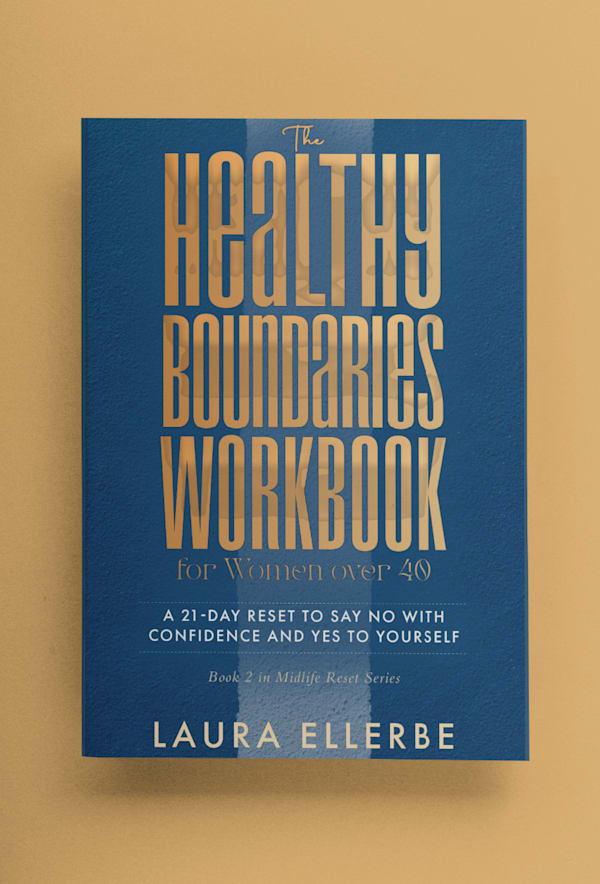
In this article, I'll walk you through simple steps you can take to create boundaries that protect your emotional well-being. You deserve relationships that nourish you, not ones that exhaust you. And if you want to dig deeper, my Healthy Boundaries Workbook will guide you even further.
Why It Feels So Hard to Set Boundaries with Parents
Many of us grew up learning to:
- Keep the peace
- Make our parents happy
- Ignore our own needs
- Stay small to avoid conflict
So naturally, setting boundaries can feel scary or even wrong. But the truth is:
- Boundaries aren't rejection. They're protection.
- Boundaries aren't punishment. They're clarity.
- Boundaries aren't selfish. They're an act of self love.
You're allowed to choose what feels healthy for you now, even if it wasn't modeled for you growing up.
What a Healthy Boundary Really Is
A boundary isn't about controlling your parents.
It's about choosing how you will show up when something hurts you.
Boundaries help you:
- Feel safe
- Stay grounded
- Stay true to your needs
- Protect your emotional, mental, and physical space.
Think of a boundary as a gentle but firm "This is what I need in order to feel well."
7 Steps to Set Boundaries With Toxic Parents
1. Notice What's Draining or Hurting You
Start by getting honest with yourself (kindly, without judgment).
What leaves you feeling small, guilty, overwhelmed, or anxious?
Maybe it's:
- Criticism
- Unwanted advice
- Emotional outbursts
- Unexpected visits
- Trying to control your decisions
Your feels are valid. What hurts you, matters.
2. Decide What You Need Going Forward
Think of the limit you want to set and what you'll do if that limit is crossed.
Examples:
- "If the conversation turns disrespectful, I'll take a break."
- "I need advance notice before visits, so I can plan accordingly."
- "I won't discuss the topic anymore."
These are not threats, they are kind promises to yourself.
3. Communicate Your Boundary With Calm, Kind Clarity
You don't have to justify your feelings or argue your case.
A boundary can be simple:
- "I'm not comfortable talking about that."
- "I need to end this conversation for now."
- "Please speak to me respectfully. If that's not possible, I'll step away."
Short and calm is enough.
4. Expect a Reaction And Breathe Through It
Parents who are used to having unlimited access to you may not love the change at first.
They may:
- Guilt trip
- Minimize your needs
- Get defensive
- Try to pull you back into old patterns
Their reaction doesn't mean your boundary is wrong.
It means the relationship is shifting, and you are growing.
5. Follow Through with Love and Consistency
This is the hardest part, and also the most empowering.
When you follow through, you teach yourself that:
- Your needs matter
- You can trust your own voice
- You are capable of protecting your peace
Consistency communicates your boundary far more clearly than words alone.
6. Create Distance if You Need It
It's okay if your boundary involves:
- Shorter conversations
- Less frequent visits
- Choosing text instead of calls
- Temporary or long term space
Taking space doesn't mean you've failed.
Sometimes it's exactly what helps you heal.
7. Surround Yourself With Support
You don't have to navigate it alone.
Healing is easier when you feel seen and supported.
Consider:
- Therapy
- Journaling
- Support groups
- Books (like the one I've written for you)
- Safe friendships
Support helps you stay grounded in your truth.
How You'll Know Your Boundaries Are Working
Bit by bit, you'll notice:
- Less anxiety around family interactions
- More confidence in your choices
- Clearer communication
- A happier, calmer you
Even if your parents don't change much, you will, and that's where your power lies.
You Deserve Peace, Safety, and Respect - Even From Your Parents
Setting boundaries doesn't make you disrespectful, ungrateful or cold.
It makes you someone who is finally choosing themselves.
And that is brave.
If you're ready to deepen this healing work, my book on creating healthy boundaries will guide you through the next steps, with simple tools, gentle encouragement, and real life scripts you can use right away.